
In industrial workplaces, eye and face protection is not simply another piece of personal protective equipment — it is an essential line of defense against workplace hazards.
Workers may encounter flying particles, dust, chemical splashes, sparks, intense light, molten material, heat and grinding debris depending on the application. Choosing the right protection for the specific hazard is therefore critical.
At Pragmatic Corporation, a strong focus on workplace safety means understanding that effective protection begins with identifying the hazard and selecting PPE suited to the specific application.
Choosing the Right Eye Protection
Safety goggles and protective eyewear can provide protection against different workplace risks.
Depending on the application, protection may include:
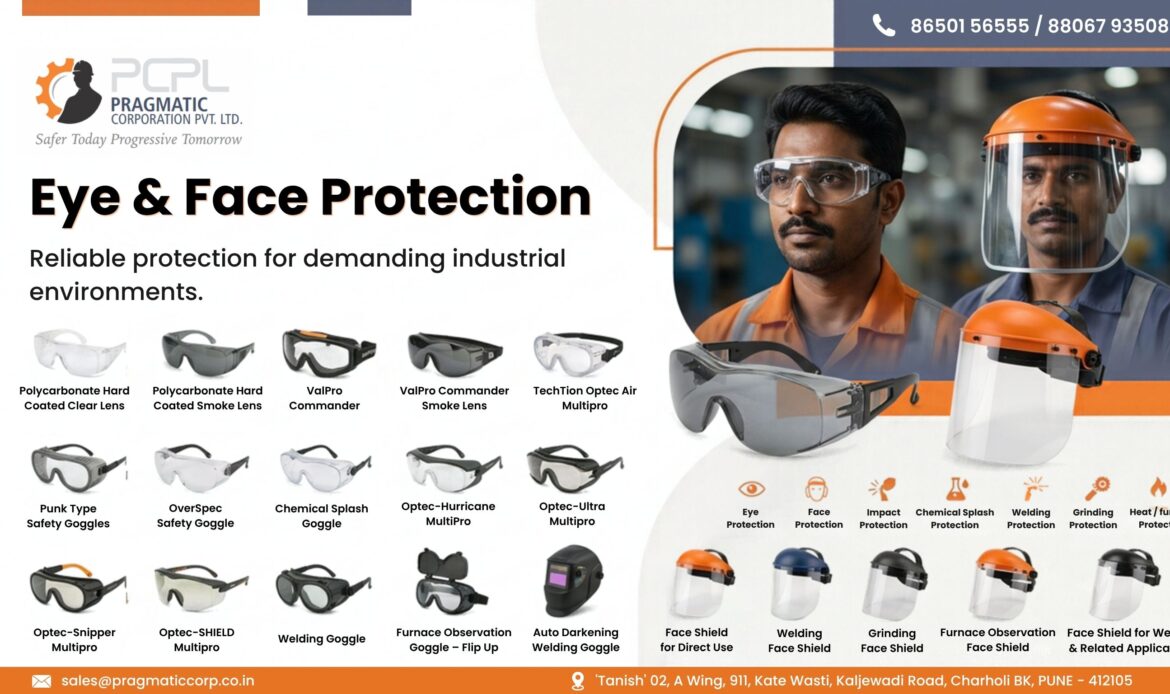
- Polycarbonate hard-coated clear lenses
- Polycarbonate hard-coated smoke lenses
- Safety goggles for general industrial applications
- Chemical splash goggles
- Overspec safety goggles
- Welding goggles
- Furnace observation goggles
- Auto-darkening welding goggles
- Specialized industrial goggles for demanding environments
Different lens technologies and designs are intended for different working conditions. The correct selection should always be based on the identified workplace hazard and applicable safety requirements.
Face Protection for High-Risk Applications
Some operations require protection beyond the eyes.
Face shields can provide additional coverage for applications involving grinding, welding, furnace observation and other activities where the face may be exposed to sparks, particles, heat or other hazards.
Applications may include:
- Direct-use face shields
- Welding face shields
- Grinding face shields
- Furnace observation face shields
- Face shields for welding and related applications
Face protection should be selected according to the specific task, exposure and required level of protection.
Why Proper Selection Matters
A safety product is effective only when it is appropriate for the hazard, correctly fitted and properly maintained.
Employers and safety teams should consider:
1. Identify the hazard
Understand whether the worker is exposed to impact, chemicals, heat, welding radiation, grinding particles or other risks.
2. Select suitable PPE
Choose eye or face protection designed for the specific application.
3. Ensure proper fit and compatibility
Protective equipment should work comfortably with other required PPE such as helmets, respirators and hearing protection.
4. Inspect regularly
Damaged, scratched, cracked or otherwise compromised PPE should be replaced according to applicable workplace procedures and manufacturer guidance.
5. Train workers
Workers should understand how to wear, clean, inspect, store and maintain their protective equipment.
Building a Stronger Safety Culture
PPE is an important component of workplace risk management, but it should complement broader safety measures such as engineering controls, safe operating procedures, worker training and hazard assessment.
For Indian industrial workplaces, selecting appropriate eye and face protection for each application can help organizations create a more structured and safety-conscious working environment.
Pragmatic Corporation remains focused on supporting safer workplaces by emphasizing appropriate protection, application-specific PPE selection and responsible safety practices.
The right protection starts with understanding the hazard.