
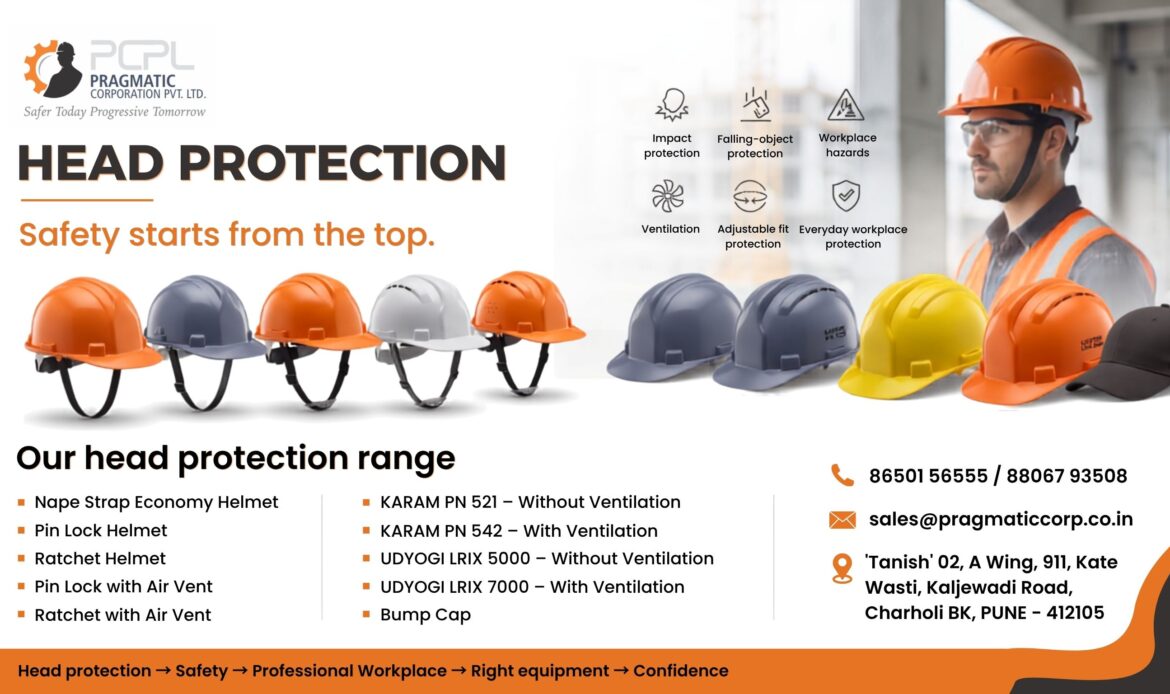
In a factory environment, safety starts from the top literally.
Manufacturing facilities involve multiple workplace hazards, including falling objects, impact risks, electrical exposure, heat, dust and accidental contact with machinery. While workplace safety involves several layers of protection, head protection is one of the most essential components of Personal Protective Equipment (PPE).
For factory workers across India, choosing the right head gear is not simply about wearing a helmet. It is about selecting protection that matches the working environment, hazards and safety requirements.
Why Is Head Protection Important?
In manufacturing and industrial environments, workers may be exposed to:
- Falling tools, components or materials
- Impact from moving objects
- Low-clearance structures and machinery
- Electrical hazards in specific work areas
- Heat and sparks during fabrication or welding
- Dust and other workplace particles
- Accidental contact with equipment
A suitable industrial safety helmet or other approved head protection can help reduce the severity of injuries caused by workplace hazards.
Types of Head Gear Used in Factories
Different industrial activities require different levels and types of protection.
1. Industrial Safety Helmets
These are commonly used across manufacturing plants, construction sites, warehouses and engineering facilities. They are designed to provide protection against impact from falling or moving objects.
2. Electrical Safety Helmets
For workers who may be exposed to electrical hazards, helmets designed and tested for the relevant electrical protection requirements can provide an additional layer of safety.
3. Bump Caps
Bump caps are useful in environments where workers face minor impact risks, such as accidental contact with fixed objects or low overhead structures. However, they should not be treated as a replacement for an industrial safety helmet where protection against falling objects is required.
4. Welding and Heat-Protection Head Gear
Welding and fabrication operations can expose workers to sparks, heat and intense light. Appropriate welding helmets, face protection and associated PPE should be selected based on the specific operation.
5. Helmet Accessories
Depending on the workplace, accessories such as chin straps, sweatbands, visors, ear protection and face shields can improve the functionality and usability of head protection.
Choosing the Right Head Gear
There is no single helmet that is ideal for every factory.
Before selecting head protection, safety managers and procurement teams should consider:
✔ Type of hazard: Identify whether the primary risk is impact, falling objects, electrical exposure, heat or a combination of hazards.
✔ Working environment: Consider manufacturing floors, warehouses, fabrication areas, chemical environments, outdoor areas and other workplace conditions.
✔ Standards and compliance: Ensure the selected PPE meets the applicable Indian standards and workplace safety requirements for its intended use.
✔ Comfort and fit: Workers are more likely to consistently wear PPE that fits properly and is comfortable for extended periods.
✔ Compatibility: Check whether the helmet can be safely used with other PPE such as face shields, hearing protection, safety glasses or respiratory protection.
✔ Inspection and replacement: Helmets and their suspension systems should be inspected regularly and replaced when damaged, excessively worn or otherwise no longer suitable for use.
PPE Is More Than a Procurement Exercise
For factories, safety equipment should not be viewed simply as another item on the purchase list.
A strong safety culture combines:
Right PPE + Proper Training + Correct Usage + Regular Inspection + Safety Awareness
Even the best safety helmet cannot provide its intended protection if it is incorrectly fitted, damaged, modified or not worn when required.
This is why organizations should educate workers about the importance of head protection and train them on correct usage and maintenance.
The Role of Safety Equipment Suppliers
For manufacturing companies, sourcing PPE from a dependable industrial safety equipment supplier can simplify procurement while helping ensure that workers receive equipment appropriate for their applications.
A good supplier should be able to understand the working environment, identify the relevant PPE categories and help businesses select suitable products based on their safety requirements.
For factories across India, this becomes particularly important when safety equipment is required across multiple departments, production lines or locations.
Building a Safer Manufacturing Workplace
Head protection is one small but critical part of a much larger workplace safety program.
From helmets and face shields to safety shoes, gloves, hearing protection and respiratory PPE, every piece of equipment has a role to play in protecting workers.
Because productivity matters—but people matter more.
Businesses that invest in the right safety equipment are not only addressing workplace hazards; they are building a culture where employee safety becomes part of everyday operations.
Choose the right protection. Train your people. Inspect your PPE. Build a safer workplace.