A Complete Range of Respiratory Protection
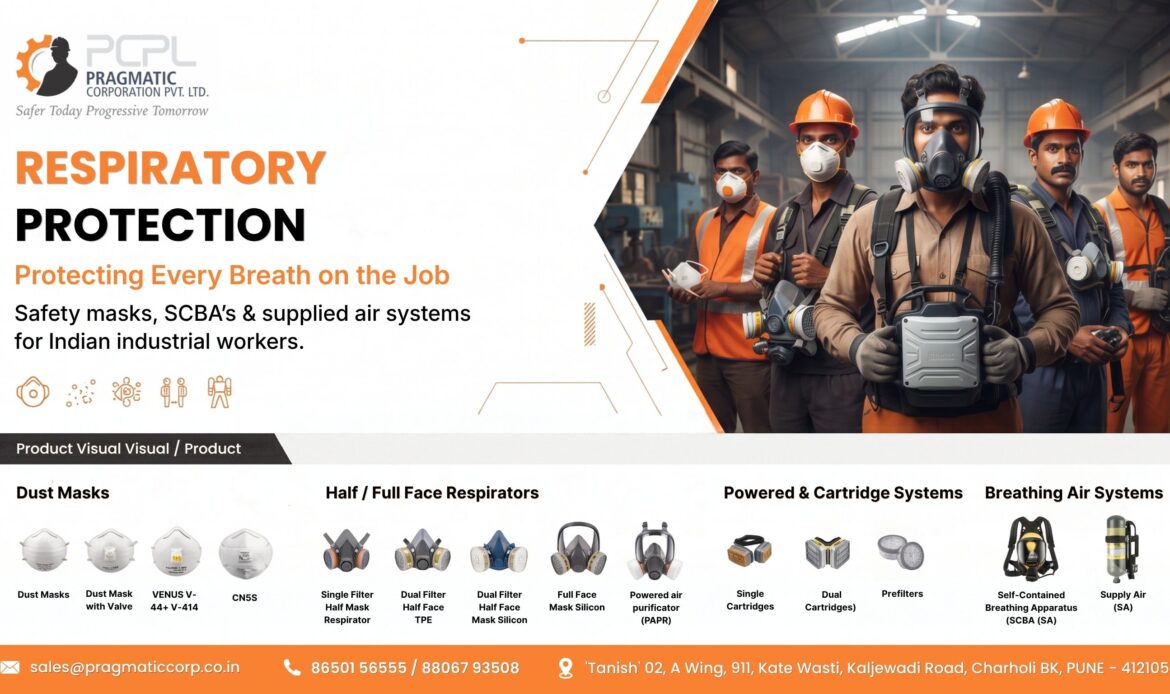
Pragmatic Corporation offers a broad range of respiratory protection solutions designed for different industrial applications, including:- P1 Dust Masks
- P2 Dust Masks
- P3 Dust Masks
- Dust Masks with Valve
- N95 Respirators
- FFP1 Respirators
- FFP2 Respirators
- FFP3 Respirators
- CN95
- Single Filter Half Mask Respirators
- Dual Filter Half Face Masks — TPE & Silicon
- Full Face Masks
- Powered Air-Purifying Respirators (PAPR)
- Single & Dual Cartridges
- Prefilters
- Self-Contained Breathing Apparatus (SCBA)
- Supplied Air (SA) systems Available Brands: VENUS | 3M | Honeywell | Karam | Udyogi | Other approved brands
Selecting Protection Based on the Hazard
Not every respiratory hazard requires the same level of protection.
For environments involving dust and particulates, suitable filtering facepieces may provide the required protection when properly selected and used.
For more demanding applications, half-face or full-face respirators with appropriate cartridges and filters can provide a different level of respiratory protection.
Where the working environment presents oxygen-deficient or immediately dangerous conditions, specialized breathing apparatus such as SCBA or supplied-air systems may be required.
The right solution should always be determined through a proper workplace hazard assessment and according to applicable safety requirements.
Protection Is More Than the Equipment
Effective respiratory protection also depends on: Correct selection — Match the respirator to the specific workplace hazard. Proper fit — A respirator must fit correctly to provide its intended level of protection. Training — Workers should understand how to wear, use, maintain and store respiratory protection correctly. Inspection and maintenance — Reusable equipment should be regularly inspected and maintained according to manufacturer requirements. Workplace practices — Respiratory PPE should form part of a broader occupational safety program rather than being treated as the only control measure.Building a Safer Workplace
A strong safety culture begins with identifying hazards before they become incidents.
Engineering controls, ventilation, safe operating procedures and appropriate PPE can work together to reduce occupational exposure and help create safer working environments.
For Indian industries, reliable respiratory protection can play an important role in safeguarding the people who keep manufacturing, construction, infrastructure and other essential operations moving.
Pragmatic Corporation — supporting safer workplaces through dependable respiratory protection solutions.